20 Email Marketing Tips and Campaign Ideas for Valentine’s Day 2026

Read summarized version with
Summary
- What it offers: Twenty email marketing tips and campaign ideas for Valentine's Day.
- Why it matters: Americans are expected to spend a record $29.1 billion, so Valentine's Day is a real revenue window.
- How to use it: Apply the ideas to build Valentine's Day emails that capture that spending.
Valentine’s Day is here and brands are excited.
Why not, when Americans are expected to spend a record $29.1 billion this year. Average budgets will also rise to about $199 per person.
NRF’s Katherine Cullen points out that this growth is coming from shoppers expanding their shopping list:
“Valentine’s Day is a cherished holiday that resonates with many Americans, as seen with expected record-breaking spending this year. Much of that growth is driven by middle- and high-income shoppers who are expanding their gift lists to include friends, co-workers and even pets in addition to loved ones.”
Email remains the perfect tool for brands to catch those shoppers.
The problem arises when every brand sends out the same red, V-Day themed emails, making readers ignore many as spam.
But clever Valentine’s Day email marketing campaign ideas can give your mails the limelight, even if everyone is doing nearly the same thing.
Read on as we share 20 email marketing tips and campaign ideas that match real buying behavior. There’s something here for every brand, big or small.
What Brands Get Wrong About Valentine’s Day
A lot of brands talk like Valentine’s Day is only about romance.
They then build their whole marketing campaign around that. People spend on their spouses and partners but many also grab little gifts for friends, classmates, teachers, coworkers and even pets.
Valentine’s is a whole shopping season. When your emails only speak to one kind of giver, you are telling everyone else to scroll past. A simple way to see where brands miss out is to look at how many people are shopping beyond a partner and how many dollars that represents
- 33% plan to buy Valentine’s gifts for friends
- 21% plan to buy Valentine’s gifts for coworkers
- 27% plan to buy Valentine’s gifts for children’s classmates and teachers
- 35% plan to buy Valentine’s gifts for pets
If your email campaign only features romantic gifting, you are also missing extra reasons for people to click, because multi-recipient shoppers want quick pathways like gifts for friends, gifts for coworkers and small under-$25 picks.
Don’t be like these brands; make no mistakes this Valentine’s season with these ideas and tips.
20 Proven Valentine’s Day Email Campaign Ideas That Actually Convert
1. Early bird emails for the planners
Planners shop early because they’re afraid of making the wrong choice. They want to feel confident in their decision and move on to the next item on their list. Your job is to give them that confidence quickly.
Send your first email 2–3 weeks before February 14 with a straightforward gift guide. Answer the three questions running through their head: what should I buy, how much does it cost, and will it arrive on time? Look at how Apple sells certainty with gift cards and simple product ladders.
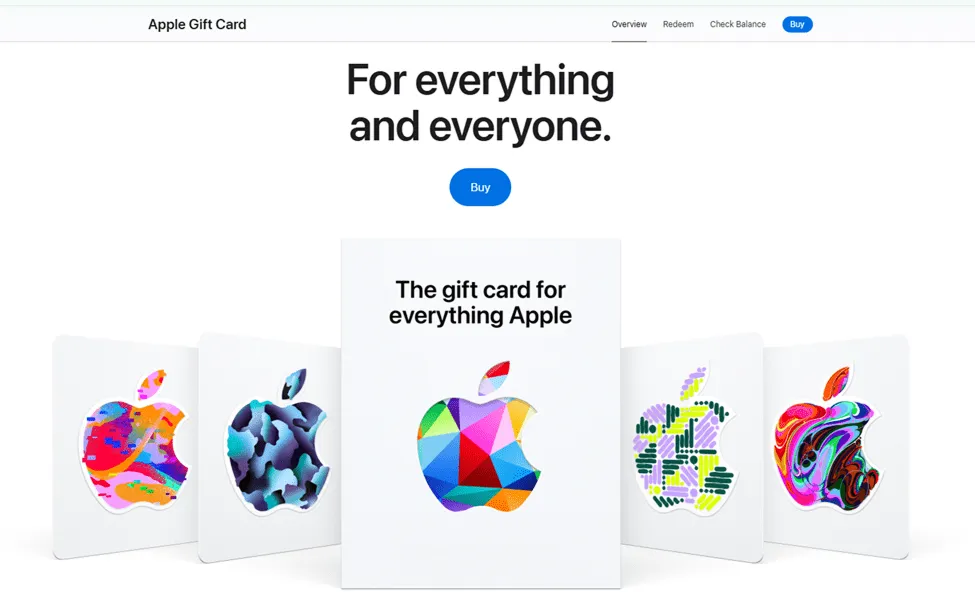
From Apple Gift Card
Sephora also nails the idea of early shopping by curating collections that feel safe to buy without overthinking.
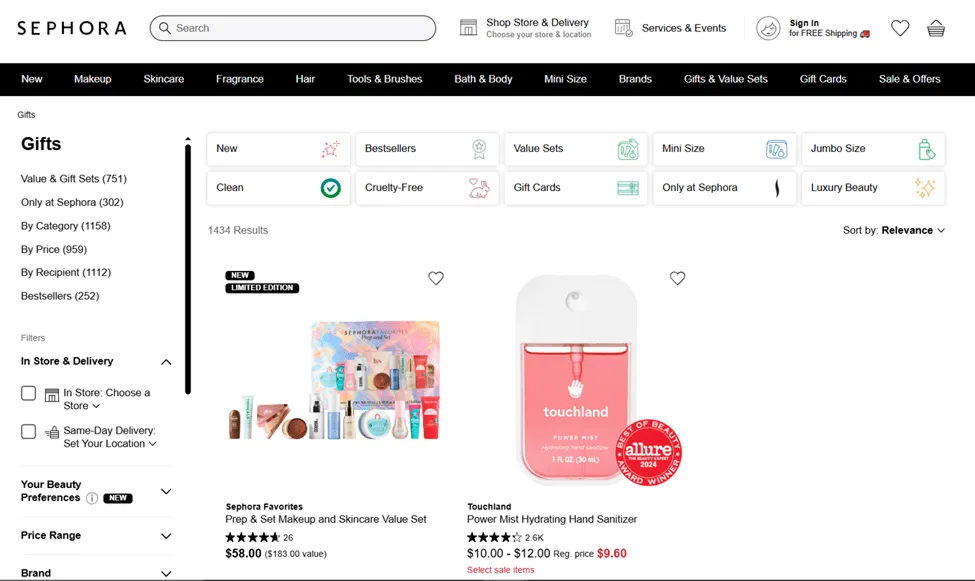
From Sephora Gifts
2. Gentle reminders for window shoppers
Window shoppers are interested, but they are not committed. Your job is to turn interest into action without sounding needy, and this is where most brands mess up. They either spam people with the same email again, or they dump a giant catalog into one reminder. Don’t be like them
Instead, send a follow-up that behaves like a helpful nudge. Build it around what the reader already touched:
- If they clicked a category, show that category again with 4 to 6 options.
- If they viewed a product, show that product plus 3 alternatives.
- If they add to the cart, show the cart plus a small sweetener.
Brands like Amazon do this really well with browse and purchase history. It works because it reduces decision fatigue.
3. A quiz that gives personal recommendations
Most people do not want 300 gift options a day before Valentine’s; they want a dozen good ones that fit their situation. A quiz works because it replaces scrolling with guidance. Build a short quiz that feels like a friend helping them shop.
But the idea is to keep the quiz short and actionable; limit it to 3 to 5 questions:
- Who is the gift for
- Budget range
- Style or vibe (romantic, funny, cozy, luxe)
- Delivery timeline
- Optional: size or preferences
Then deliver a result page with instant add-to-cart. If you need some inspiration, check out Warby Parker; they do it really well, mostly because it simple and guided.
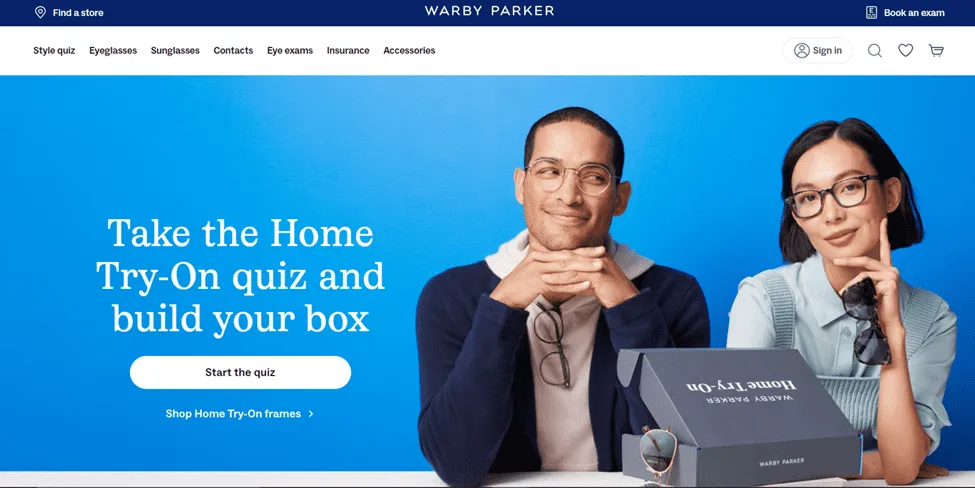
From Warby Parker
4. Shipping deadline countdown with real urgency
Your reader has a very important question: will this arrive on time?
Answer it clearly and honestly. Put the deadline in large text at the top of the email and repeat it in the call-to-action button.
Build a logical countdown sequence
- Start seven days out with your standard shipping deadline.
- Five days before Valentine’s Day, shift to expedited options.
- Three days out, announce the last chance for expedited delivery.
- In the final day or two, pivot to digital gifts, gift cards, and local pickup options.
Each email moves the shopper toward solutions that still work instead of making them feel like they’ve missed their chance.
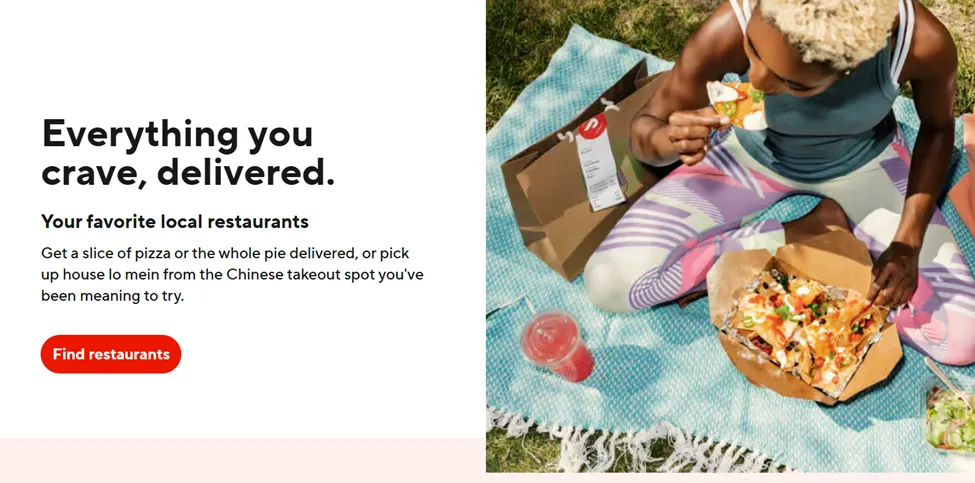
From DoorDash
Look at how DoorDash sell delivery with tight promise language and clear deadlines. That approach works well for physical goods too
5. The shop for multiple people campaign for those shopping for partners, kids, friends and family members
A lot of Valentine shopping is actually multi-recipient shopping, and people appreciate it when you acknowledge that without making them scroll through a single generic gift list.
Structure this email around who they are buying for, not what you are selling.
Think for your partner, for your best friend, for the kids, for your mom, for your work friend, then place the products inside those buckets.
You will get extra credit if you include non-romantic language like Galentine, Palentine, family love and self-love, because that makes the email feel welcoming and broadens your conversion pool immediately.
6. Self-love campaign for solo buyers
Self-love emails win because they remove awkwardness. Plenty of people buy for themselves during Valentine’s day, and plenty more buy for a friend who needs a boost.
So stop writing everything like it only matters if someone has a partner.
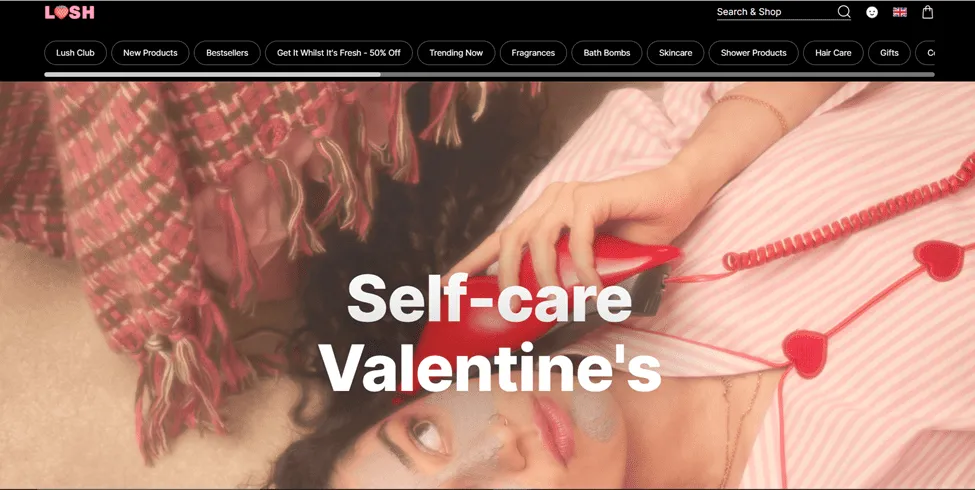
From Lush
We love how Lush sells self-care as a mood instead of a discount.
Always remember not to not bury self-love in one tiny section at the bottom. Give it its own email, its own subject line, and its own landing page.
You will reach buyers you otherwise miss. Also, self-love buyers tend to convert well because they know their own taste.
7. Galentine’s guide for friend gifting
Galentine’s is perfect because it gives you permission to sell playful gifts without the heavy romance. Friends shop for friends in a way that feels lighter, and often more frequent, so lean into it.
Write the email like you are planning a fun night with your best friends
- Snacks and drinks
- Cozy items
- Beauty minis
- Little accessories
- Matching sets
Your merchandising should match the moment. Friends want items they can share or post. Bundles work really well here, especially multipacks
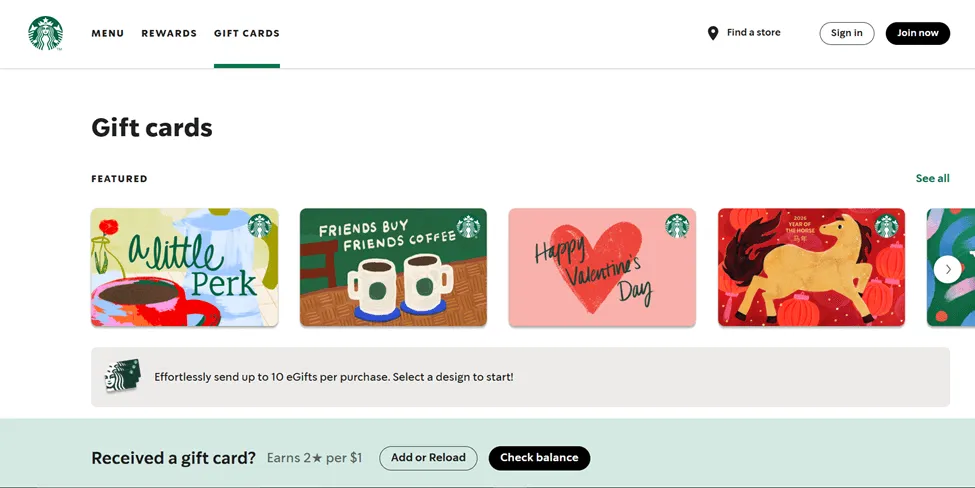
From Starbucks Gift Cards
For instance, Starbucks gift cards work well for friends because they feel low pressure and are universally useful.
8. A B2B campaign to treat your employees (or even coworkers)
A B2B Valentine campaign works best when it is framed as appreciation and morale rather than romance, because the buyer is thinking about recognition, team culture and retention.
The email should make the purchase feel easy to justify by calling out practical benefits. Such an email helps in quite a few ways;
- It increases engagement in an office environment,
- It creates a feel-good moment during a busy quarter,
- It can offer a perk that teams actually us
If you can, include a simple package structure that feels made for businesses, like per-seat pricing, bulk purchase options, or a quick way to get an invoice, because that removes friction for the person buying on behalf of others.
You can also expand the audience by including coworker-friendly angles like team shoutouts, thank you gestures, or a small celebration for hitting a milestone, since plenty of companies want a seasonal hook to do something nice.
9. Anti-Valentine’s campaign for the romantically allergic
Not everyone wants hearts and roses in their inbox, but plenty of people still want a good deal in February, so this is a perfect moment to give them a different door into the same sale.
The trick is to frame it as self-care, a treat for your home, a refresh for your routine or a practical upgrade that just happens to be discounted right now, so customers can shop without feeling like they are being pushed into a holiday mood they do not want.
If your brand voice can pull it off, a playful tone works well here because it makes the message feel inclusive instead of awkward, and it also gives people permission to opt out of the Valentine vibe without opting out of you.
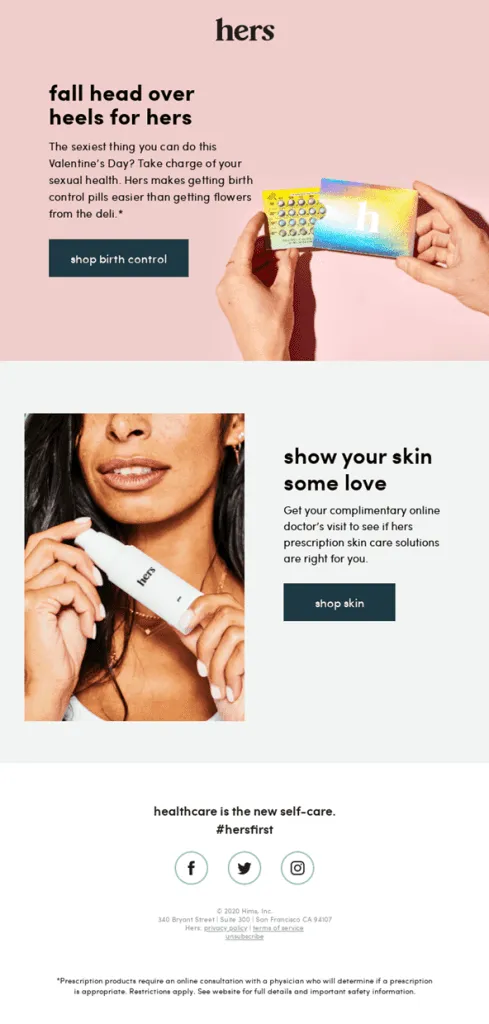
From Really Good Emails
A nice example to study is how hers leans into a confident do it your way vibe for Valentine’s Day, which is a great blueprint for positioning the moment as personal instead of performative.
10. The last-minute panic email, since there will always be procrastinators
Last-minute shoppers are not looking for inspiration first, they are looking for relief, so your email should feel like a shortcut.
It helps to include quick decision paths like shop by recipient, shop by price or bestsellers that always sell well, and you will usually see stronger conversion when you reduce the number of choices on the first click and let the product page do the rest of the work.
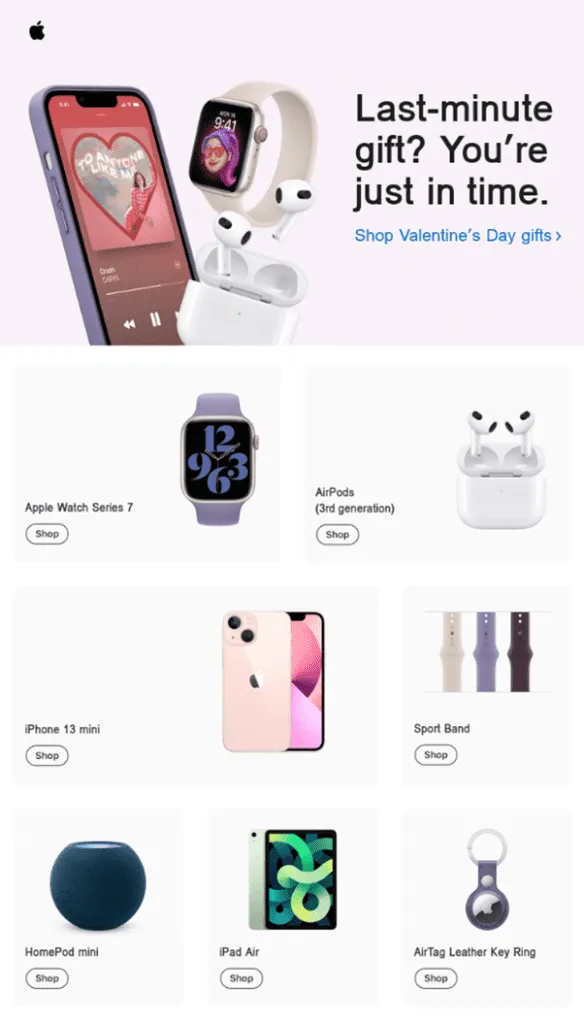
Apple, for instance, uses a simple it’s not too late message that does not overcomplicate the promise, which is exactly what procrastinators need when they open the email in a hurry.
11. Recovery campaign for those who completely forgot or whose plans fell through
This is the campaign that catches people after the big moment, when they are either feeling guilty, disappointed or simply still in the mood to do something nice but they missed the date.
You can position it as a second chance that feels generous rather than salesy, like a make it up to them bundle, a we saved you a spot offer, or a small add-on gift that makes the purchase feel more meaningful.
If you have the data, this is a great time to personalize based on browsing behavior from the week before Valentine’s Day, because those signals are still fresh and the customer is more likely to recognize the products.
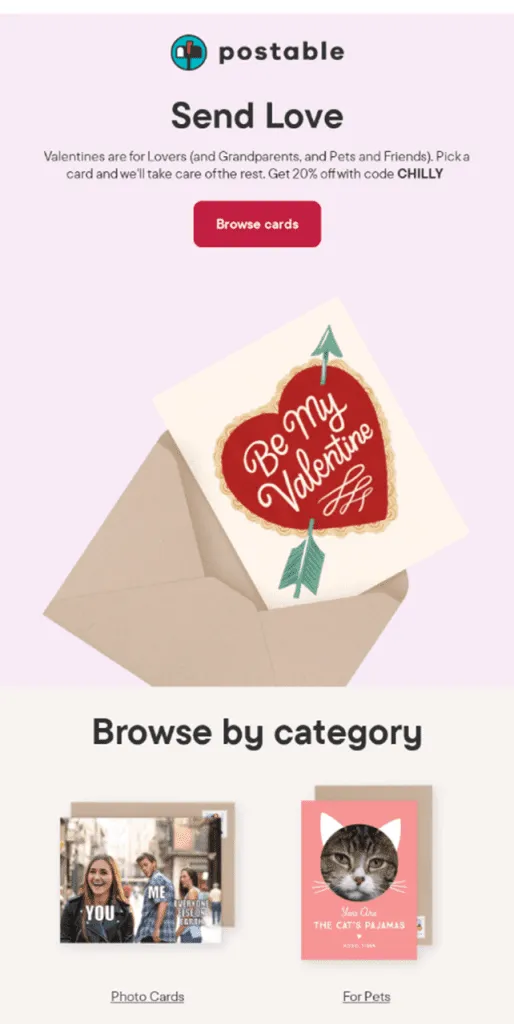
From Really Good Emails
A good example is Postable running a Valentine’s themed push that is simple and action-forward, which is a useful model for how to keep momentum going without making the message feel late
12. The special campaign for long-distance relationships
Long-distance shoppers are often trying to close an emotional distance with something that arrives smoothly, feels personal and does not create extra logistics, so your email should make the distance feel manageable.
Gift cards, subscriptions, care packages, and scheduled delivery options do well here because they remove uncertainty. If your product supports it, letting the buyer add a note, choose a send date, or bundle a small free add-on like a digital card can make the purchase feel far more intimate.
This is also a great segment for reminders, because long-distance gifting usually involves planning across shipping zones and work schedules.
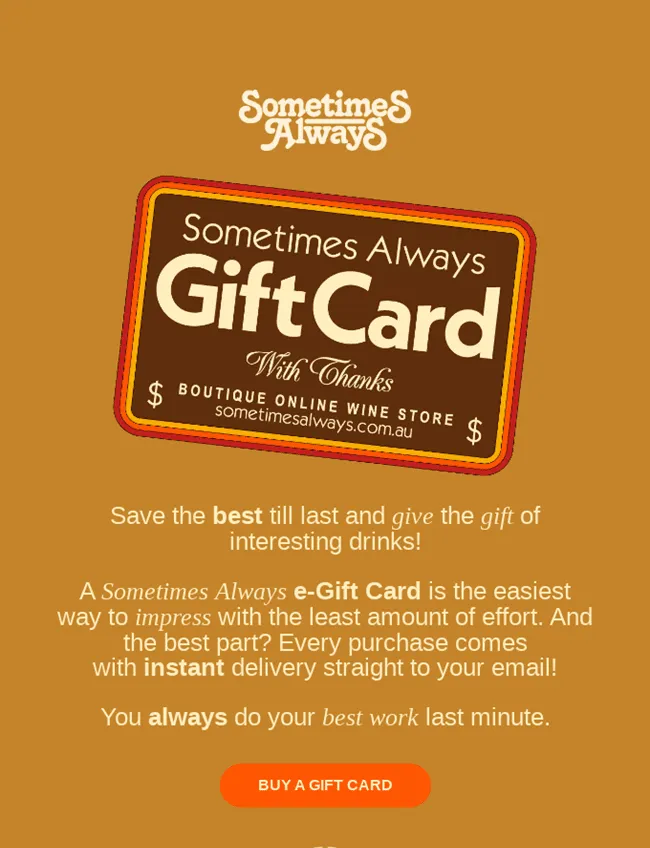
From Really Good Emails
Sometimes Always leaned into the we have you covered angle with an e-gift card solution that is designed for people who need something instant and still thoughtful, which fits long-distance needs almost perfectly.
13. The new relationship starter pack with carefully curated options
New relationships are full of excitement and uncertainty, so shoppers tend to lean toward gifts that feel thoughtful but not too intense, which makes curated starter packs a perfect fit.
The best way to build this email is to create a few mini collections based on personality types or early-stage moments, like first Valentine, new crush, getting to know you, or low-key but sweet, then recommend items that feel safe, fun and easy to give.
You will also get better results if you keep the tone light and a bit playful, because that matches how people want to navigate early relationship gifting.
14. A dedicated campaign featuring thoughtful gifts under specific price points ($25, $50, $75)
Price-point gift guides work because they remove the most common friction in Valentine shopping, which is ‘I want it to feel meaningful but I also want to stay on budget’
You can make this campaign feel more curated by naming each tier with a simple vibe, like small but sweet, the safest crowd-pleasers, andthe wow pick, then selecting a tight set of items in each tier that are visually consistent and easy to compare.
To increase clicks, put the price-point navigation above the fold and make sure every tier has at least one item that looks like a gift right away.
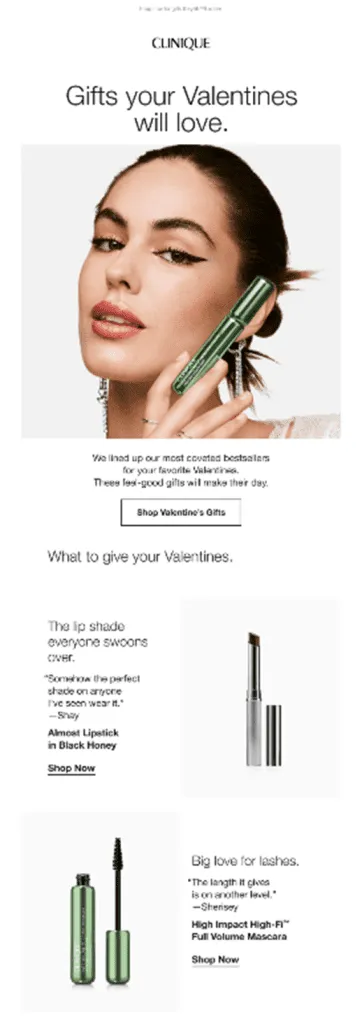
From Really Good Emails
Look at how Clinique runs a top gifts style email that feels like a guided shop, which is the energy you want when you are organizing by budget.
15. The luxury indulgence collection for those who want to splurge on premium gifts
Luxury Valentine campaigns sell emotion first and product second, so the email should feel like an experience even before the customer clicks.
- Lead with a strong hero image,
- Keep the copy minimal but descriptive
- Let the details do the persuasion (like signature packaging that looks like a gift)
You can also make the offer feel more premium by building a collection that is intentionally small, because it makes the customer feel like they are choosing from the best rather than digging through options.
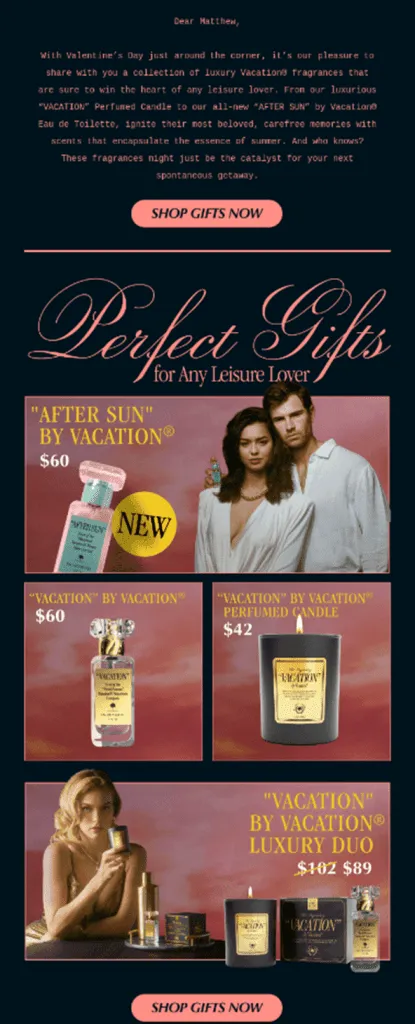
From Really Good Emails
Vacation has a great luxury-leaning Valentine example that literally frames the purchase as gifting luxury.
16. The experience-over-things alternative (great if you sell services, classes, vouchers, or experience packages)
If you are selling an experience, the email should help the reader picture the moment, because that mental image is what creates the feeling of value.
Focus on what the recipient will do, how they will feel, and how easy it is to book, redeem, or schedule, and you will usually outperform a discount-heavy approach because experiences already feel special without needing a big percentage off.
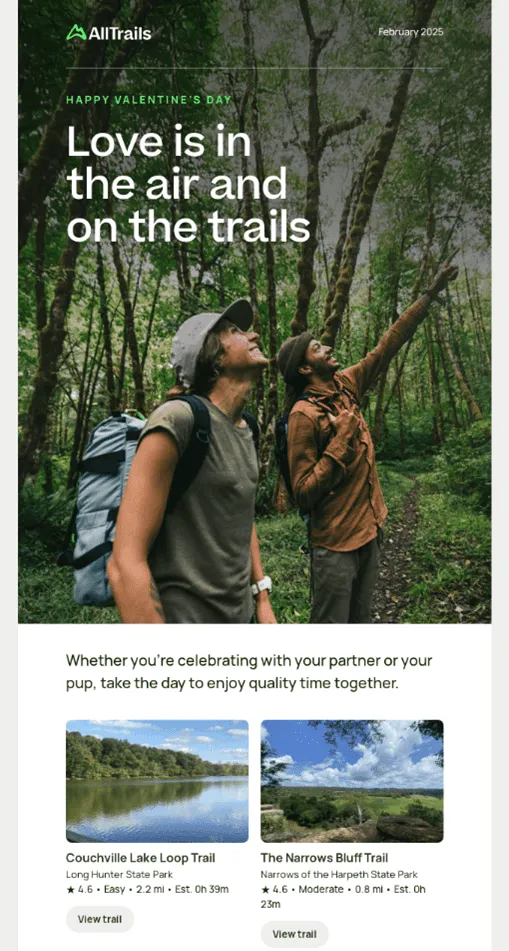
From Really Good Emails
A solid Valentine reference is AllTrails; it ties the holiday to getting outside together, which is a great reminder that your brand does not need to look like Valentine’s Day to belong in Valentine’s Day.
17. The long-term love refresh campaign for couples who have been together for years
For long-term couples, the goal is usually not to find the biggest surprise; it is to find something that feels like a reset or a small upgrade to routines they already enjoy.
Your email can tap into this by focusing on togetherness, comfort, inside jokes or traditions, and by suggesting gifts that feel like quality time. It could be a movie night kit, a cooking moment or just something that makes their home feel nicer.
It helps to avoid generic romance language here and instead speak like you understand the reality of busy schedules, shared responsibilities and the desire to keep things feeling intentional.
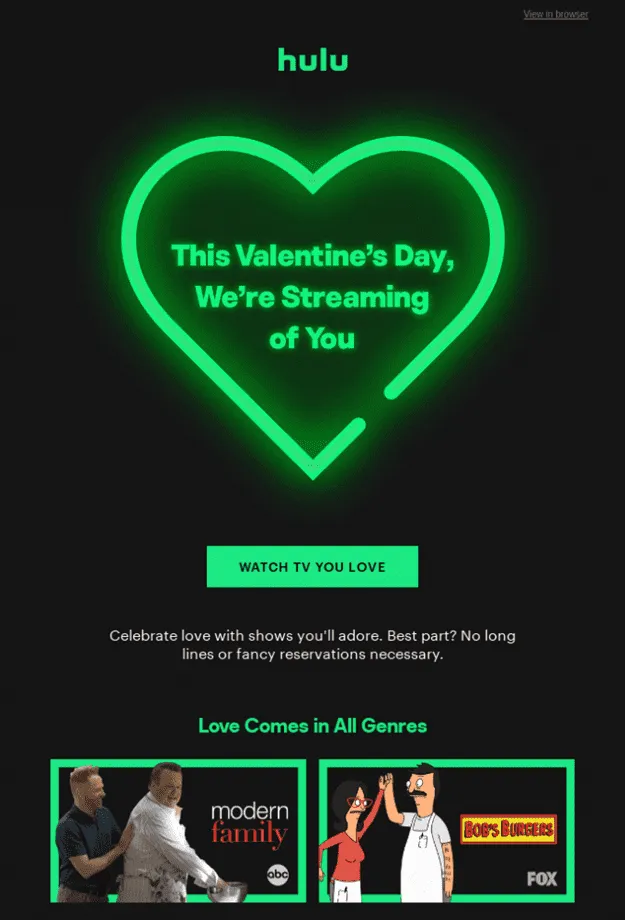
From Really Good Emails
A good creative reference is Hulu leaning into favorite couples content, which shows how to refresh the relationship without forcing the same old gift guide format.
18. Surprise and delight VIP campaign to reward your most loyal customers
VIP Valentine campaigns are about making your best customers feel seen, and the easiest way to do that is to give them access or extras that regular subscribers do not get.
You can experiment with
- Early access,
- limited drops,
- special bundles,
- free gift wrapping,
- a small gift with purchase.
You will usually see better results when the email makes it obvious that this is a thank you, not just another promotion with a fancy label.
Keep the copy warm, keep the offer simple, and make the landing page match the promise so the VIP moment does not evaporate after the click.
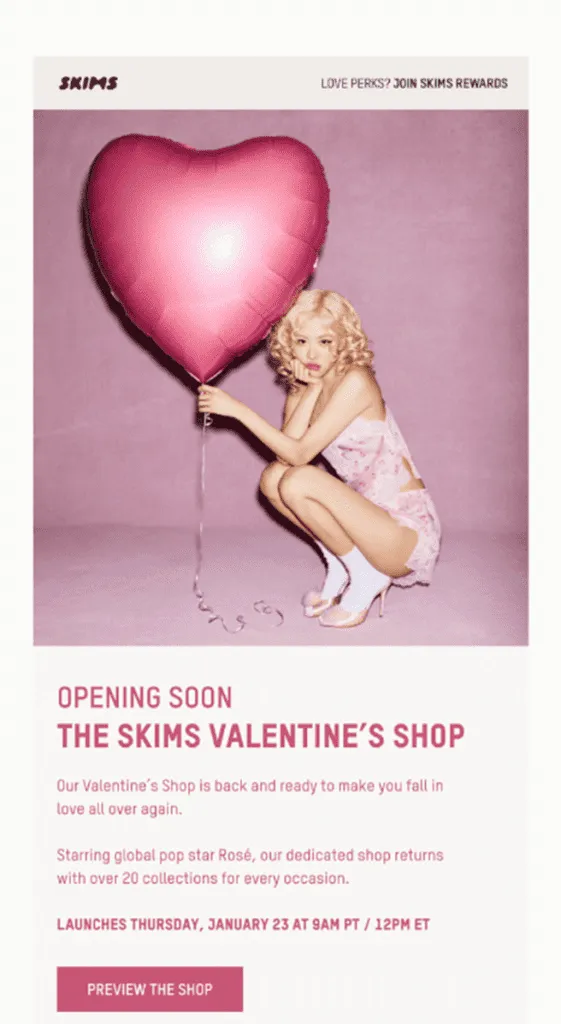
From Really Good Emails
SKIMS teasing a Valentine’s shop launch is a good example. It’s the kind of early access moment that maps really well to a VIP segment when you add a loyalty layer on top.
19. The social media contest announcement
A Valentine contest works when it is easy to enter and fun to share, and email is the perfect channel to kick it off because you can explain the rules clearly and then push people to social for the action.
Keep the mechanics simple, like tag someone, share a story, submit a photo, or post a creative use of your product, and make the prize feel in line with what your audience actually wants.
A random giveaway might get entries, but it will not always get the right kind of engagement.
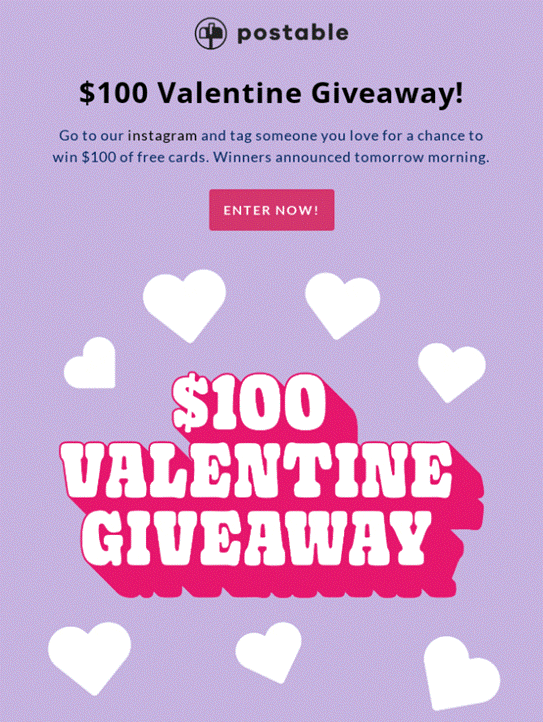
From Really Good Emails
Postable has a Valentine’s Day giveaway email that’s a great inspiration for how to make the offer and entry prompt feel bold and immediate.
20. The post-Valentine’s engagement and review campaign
Once Valentine’s Day passes, your customers are still emotionally warmed up, and that makes it a great time to ask for feedback, reviews and user-generated content. That’s as long as you make it feel like a continuation of the experience.
To increase completion rates, keep the review flow short, mobile-friendly, and ideally embedded with a quick rating inside the email, then let customers add details only if they want to.
In our opinion, the best angle is to focus on helping future shoppers, celebrating the moment or even giving the customer a little recognition.
You can sweeten it with a small incentive like points or a discount on the next order.
Some offbeat Valentine’s Day marketing tips that work surprisingly well
You got plenty of ideas and strategies, right? Now, that automatically won’t make you a wizard at email marketing. Follow these best practices so that you know you’re giving it your 100.
a. Mine your customer data for relationship intel
Your purchase history already tells you who’s buying for themselves versus shopping for a partner. Someone who browses jewelry, then adds cologne or a wallet to their cart is likely gift shopping.
Use that data to adjust your messaging.
It’s a good idea to send the solo browsers content about treating themselves, and send the gift shoppers your curated guides with clear recipient categories.
This kind of segmentation feels helpful because you’re making their experience easier.
b. Use actual customer photos instead of stock imagery
Stock photos feel generic, especially for something as personal as Valentine’s Day.
Real customer photos make your products look like something people actually buy and enjoy giving.
You can offer a small discount or store credit in exchange for submission rights, then feature those images in your emails and on product pages.
c. Make your unsubscribe copy Valentine’s themed
Most people land on the unsubscribe page out of frustration, but you can change the tone before they click out for good.
Try something like “Not ready to break up? Adjust your preferences instead” with an easy option to reduce email frequency or switch to holiday-only messages.
The playful language catches people off guard in a good way, and giving them control often saves the relationship.
d. Build gift guides by love language, not gender
“Gifts for him” and “gifts for her” force people into categories that don’t always fit how they actually shop.
Organize by love language, instead, like quality time, acts of service, words of affirmatio or physical touch.
This way, people find something that matches how their partner experiences love. It makes the shopping process feel thoughtful instead of transactional.
e. Offer a no-questions-asked exchange policy through March
Gift-giving is filled with anxiety, and more so when someone isn’t sure they picked the right thing.
Extending your exchange window through the end of March removes that pressure and makes your store feel like the safe choice.
Most people won’t actually return anything, but knowing they could makes them more likely to buy in the first place.
How to plan out your Valentine’s Day email campaign
This is a 6-week plan, which we feel is the sweet spot because you still have time to make smart changes without rushing, and you can spot what worked last year before you start building new emails.
Let’s begin.
6 weeks before: Dig into last year’s data and map your audience
Valentine’s Day campaigns are won by planning and relevance, not by making everything louder in February.
First, look up last year’s performance and look for patterns:
- which emails collected the most revenue
- which subject lines got the highest opens, and
- which emails led to clicks but not purchases
Last year’s data will tell you what to (and what not to) repeat this year. If you are starting fresh, start directly with audience research.
Next, segment your email listto mirror how people shop. A simple, effective setup is
- purchase history (new, repeat, VIP)
- product interest (what they browsed or bought)
- engagement (high, medium, low)
Pro tip: Build one core creative layout, then swap the hero and product blocks per segment to save time.
4 weeks before (late January): Build anticipation and give VIPs the first look
At this point, you are warming up the list and getting early sales without exhausting your audience.
Your VIPs and recent buyers are the easiest ones to attract, so treat them like insiders with a preview, early access or a limited bundle, then roll the same theme out to the rest of the list a few days later.
- Launch an early bird or VIP preview campaign
- Test 2 to 3 subject line styles so you know what tone works before the busiest week
- Try one creative approach that is gift-led and one that is offer-led, so you learn what drives clicks
Pro tip: Test your main call to action early; the button text that wins in late January often keeps winning all the way through February.
2 weeks before (early February): Turn on the heat with your main promotions
Now your goal is to make shopping feel easy. Roll out your main promotional sequence with a theme and a consistent landing page, then add in gift guides that match different recipient types.
People do not want to work hard to decide, especially when they are shopping for more than one person.
A strong flow is 3 to 5 emails over this period – one big announcement, one gift guide, one social proof or bestsellers, then one reminder. If you can segment gift guides by recipient type, do it. It improves relevance fast without adding much work.
Pro tip: Keep one email in the sequence focused on confidence, like bestsellers, as it helps anxious shoppers commit
1 week before (Feb 7 to 10): Create urgency right ahead of the big day
A daily countdown can work well for engaged segments, as long as each email adds something new, like a different angle, a different recipient type or a tighter product edit.
Make shipping deadlines very clear, and repeat them in more than one place – subject line, preheader and the top of the email. The most effective emails during this period include
- Daily countdown emails for high-engagement subscribers
- Shipping deadline reminders with region-aware cutoffs if possible
- Last-minute gift suggestions that do not rely on shipping
- Same-day delivery or pickup pushes for shoppers who need it fast
Valentine’s Day and after (Feb 14 to 17): Catch the forgetters and the deal-seekers
Valentine’s Day itself is perfect for last-chance digital offers. And the day after is where you clean up with a ‘forgot? save it’ campaign that reframes the purchase as a make-it-up moment, a belated surprise or a treat-yourself buy.
If you run clearance sales, this is also a great time for a short post-holiday sale that feels like a bonus.
Keep the tone light, keep the path to purchase simple and keep the offer specific.
How SmartrMail makes Valentine’s Day email marketing easier
If you are trying to run all of this without making February a stressful mess, SmartrMail is your answer.
Smartrmail is an AI-powered email marketing platform built for e-commerce. Smartrmail focuses heavily on automations, templates and product-driven personalization.
It connects directly with major e-commerce platforms, like BigCommerce, Shopify and WooCommerce, so your store data can power smarter segments and more relevant emails.
Here are the parts that matter most for a Valentine’s push:
- Pre-built email automations you can turn on quickly, so your core flows are not missing while you focus on campaigns
- Pre-made ecommerce email templates you can start from, then customize for your brand and seasonal promos
- Smart segmentation and personalization, including automated product recommendations based on purchase history, browsing behavior and clicks
- Powerful ecommerce integrations with platforms like Shopify, BigCommerce, WooCommerce, PrestaShop and Maropost Commerce Cloud
Start planning your Valentine’s Day campaign with SmartrMail.
FAQs
When should I start my Valentine’s Day email campaign?
Start about six weeks out so you have time to review last year’s results, segment your list and test creative elements before the busy window.
What’s the best send time for Valentine’s Day emails?
Target the time your audience normally opens and clicks, then adjust by segment, since engaged subscribers can handle earlier emails and low-engagement segments often do better with fewer, higher-value emails.
How many Valentine’s Day emails is too many?
The rule of thumb is that if unsubscribes spike and revenue does not rise, you are sending too many. If people keep clicking and buying, your pace is probably fine.
Should I discount for Valentine’s Day?
Discounts can work, but bundles, gift sets and free extras like wrapping or fast shipping can feel more gift-friendly while protecting margin.
What if my products aren’t traditionally romantic?
If your products are not inherently romantic, you can frame them as self-care, friendship gifts, family gifts, or even experiences. Use gift guides by recipient type so people immediately see how it fits
Launch your next campaign in a flash
15 days free. Then free forever up to 200 active subscribers. Cancel anytime, no questions asked.
You might also like
Unlock the secrets to thriving in the e-commerce world with expert insights, growth tactics, designs, templates, and much more to drive sales for your online store.